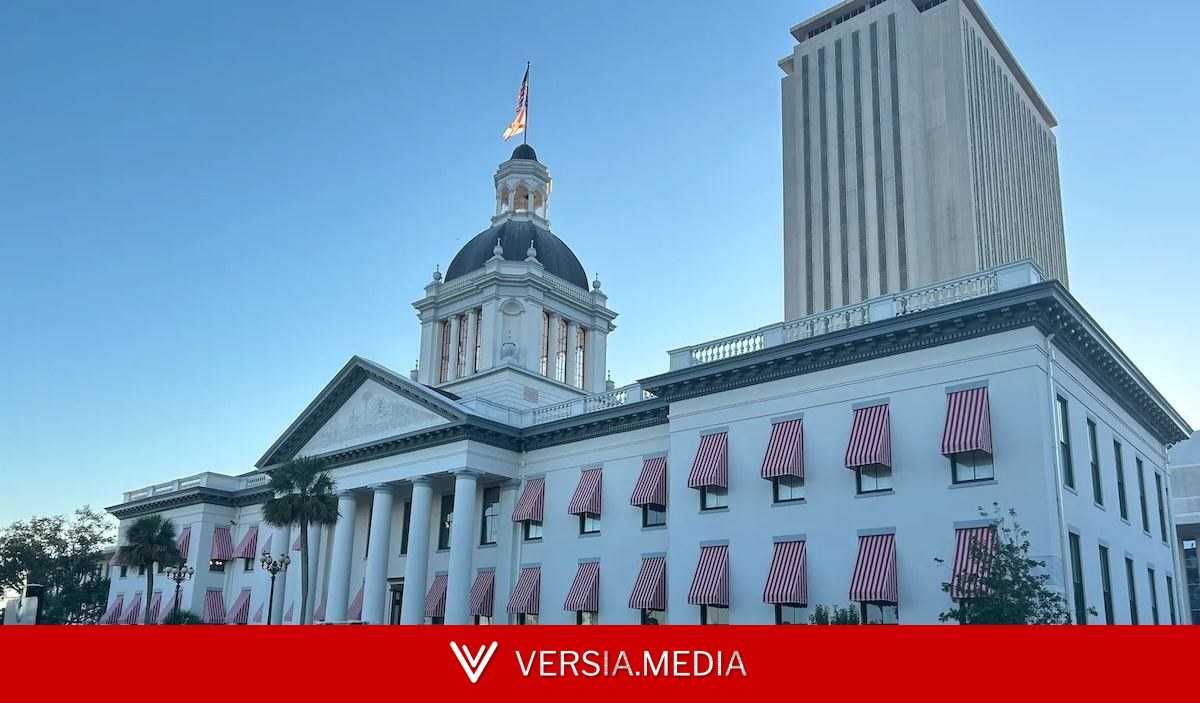
Florida Gov. Ron DeSantis signed HB 1389, making Live Local 4.0 official. The law waives sovereign immunity for Fair Housing Act claims, mandates YIGBY approvals, and expands by right eligibility to certain public parcels. AI Summary
Gov. Ron DeSantis signed the fourth iteration of the Live Local Act on Friday, cementing the state’s commitment to building affordable housing.
House Bill 1389 takes effect July 1. It extends state preemption of local zoning rules and closes a loophole that local governments used to discriminate against affordable housing projects with relative impunity.
Since the original Live Local Act was passed in 2023, Florida has become a national model for using zoning preemption to expand housing supply. Each successive rewrite has tightened state control and narrowed local resistance. The latest passed in March despite a fight over accessory dwelling units.
Funding programs for Live Local survived $810 billion in line-item vetoes DeSantis made.
Fair Housing Act overhaul
One provision amends the Florida Fair Housing Act. It closes a gap courts had used to block discrimination suits against local governments.
The change stems from a ruling against Coral Rock Development . Pompano Beach rejected the developer’s affordable townhome project based on its financing. The city then approved a similar project on the same site, but required a different developer sign a covenant banning affordable housing on the property. Coral Rock sued the city for discrimination in 2021.
In 2024, a state court found the Florida Fair Housing Act did not explicitly waive sovereign immunity, leaving the developer without a direct path to sue. The ruling also meant cities statewide could use the same tactic to deny affordable housing projects.
HB 1389 eliminates that barrier. Local governments can no longer treat projects differently because they carry affordable housing funding or an affordability designation. The bill also explicitly waives sovereign immunity, giving developers a direct legal route to court when a jurisdiction discriminates against an income-restricted project.
“This wasn’t just about one project,” Michael Wohl, principal of Coral Rock, said in a statement. “It sent a message across Florida that affordable housing could be blocked without consequence … That ends today.”
Cities and counties now risk civil-rights liability – not just a lost zoning challenge – if they impose extra hearings, unusual conditions, or outright denials on Live Local or other affordable projects based on financing or affordability status rather than objective land-use criteria.
“This legislation helps ensure that housing projects are evaluated fairly and based on their merits, while ensuring developers the certainty needed to invest in Florida,” state Sen. Alexis Calatayud, the bill’s sponsor, said in a statement.
YIGBY goes mandatory
HB 1389 transforms the state’s “Yes in God’s Backyard” program from a local option into a mandate. Under a law passed last year, counties and cities could choose to allow affordable housing on faith-owned land not zoned for residential use. Under HB 1389, they no longer have that choice.
Local governments must now approve qualifying affordable housing projects on land owned by religious institutions, regardless of underlying zoning. That places church properties inside the same by-right framework covering commercial, industrial, and mixed-use land under the Live Local Act.
To qualify, a property must be owned by a religious institution and span more than three acres. It must also have hosted active public worship for at least 10 years before application. Projects must set aside at least 40% of units as affordable rentals. That threshold unlocks full Live Local entitlements: increased density, height allowances, reduced parking, and administrative approval bypassing quasi-judicial review boards.
Surplus government land
HB 1389 also expands Live Local eligibility to properties owned by counties, municipalities, and school districts – land previously excluded from the law’s by-right zoning mandate.
To qualify, the local government or school district must co-apply with the private developer. The provision targets underutilized public parcels for affordable and workforce housing without a rezoning. Those include vacant lots, surplus office buildings, and aging school sites.
Local governments retain a role as a required party to the application but cannot use that position to block a project that otherwise meets Live Local’s eligibility criteria.
Since the law’s inception, 223 projects totaling nearly 67,000 units have been proposed statewide, according to the Florida Housing Coalition’s tracking dashboard. Of those, 24 are under construction, totaling 9,400 units.
Leave a Reply Cancel reply
Your email address will not be published. Required fields are marked *
Comment *
Email *
Save my name, email, and website in this browser for the next time I comment.
“Gallia est omnis divisa in partes tres.” All Gaul is divided into three parts. Julius Caesar used those words more than 2,000 years ago to begin an account of military conquest. America’s housing affordability challenge might be described similarly. Like Gaul of yore, it divides into three parts: talk, action, and outcomes. Identifying the three […]
Why we can’t get more housing construction in the US Jun 24, 2026
Fannie Mae to expand title pilot program, Pulte says Jun 24, 2026
Housing demand holds steady as regional inventory trends reshape the market Jun 25, 2026
Mortgage performance steady in May as calendar drives delinquency bump Jun 26, 2026
Florida homebuyers sue Compass over $475 transaction fee Jun 26, 2026
LodeStar says purchase closing costs fell 2.9% in 2025, with 28 states posting declines. Costs in D.C. fell 21.1% while Delaware’s rose 4.5%.
Select a zip code to view market data, or leave blank to see national trends.